Engineered Interruption: How Push Notifications Are Designed to Override Your Judgment
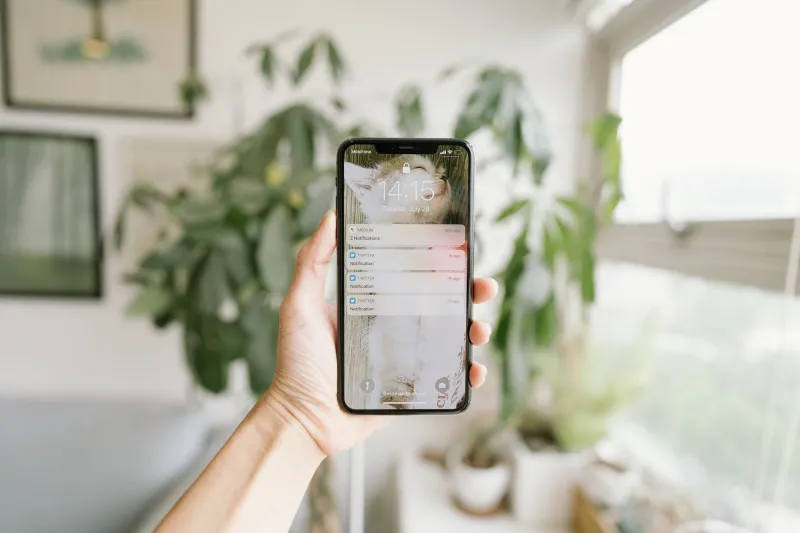
Every day, the average American smartphone receives somewhere between 65 and 80 push notifications. That figure, drawn from mobile analytics research published over the past several years, sounds inconvenient. What it actually represents is something more consequential: a coordinated, algorithmically timed campaign to interrupt your thinking, redirect your attention, and pull you back into an app you had already chosen to leave.
This is not a side effect of poor product design. It is the product.
The Architecture of Interruption
To understand why notifications are built the way they are, it helps to understand the psychological framework that underpins them. Behavioral researchers have long documented the power of what is sometimes called variable reward scheduling — a mechanism in which unpredictable, intermittent reinforcement produces stronger compulsive responses than consistent, predictable rewards. It is the same principle that governs slot machine design.
Push notifications operationalize this principle at scale. An alert that reads "Someone reacted to your post" or "You have 3 new matches" does not convey information so much as it manufactures anticipation. The user does not know whether the reaction is positive or negative, whether the matches are meaningful or not. The uncertainty is the point. It creates a low-grade compulsion to open the app and resolve the ambiguity — and by the time the user has done so, the app has already won.
Product teams at major platforms refer to this design loop internally using terms like "re-engagement triggers" and "dormancy prevention." The language is clinical. The intent is straightforward: to interrupt whatever you were doing and return you to a revenue-generating environment.
Timing Is Not Accidental
Modern notification systems do not fire randomly. Machine learning models embedded in app backends analyze individual user behavior — when you typically unlock your phone, how long your sessions last, at what point during the day your engagement is highest — and schedule alerts accordingly. This means that the notification you receive at 7:14 a.m. on a Tuesday was not sent at that moment by coincidence. It was sent because your behavioral profile indicated that you were likely to be reaching for your phone.
Apple and Google both provide developers with APIs that enable this kind of scheduled, personalized delivery. Neither company prohibits the practice. The result is a notification ecosystem in which the timing, frequency, and wording of alerts are optimized not for your benefit but for the platform's retention metrics.
The Muting Illusion
Many users, upon becoming aware of how intrusive notifications have become, respond by silencing them — either for specific apps or across the board. This is a reasonable instinct, but it addresses only one layer of the problem.
When users disable notifications, platforms frequently redesign their in-app experience to compensate. Unread badge counts persist on home screen icons. In-app inboxes accumulate flagged items. Red dot indicators multiply across menu tabs. Some applications send what are technically classified as "transactional" notifications — order confirmations, security alerts, account summaries — that bypass standard notification preferences because they are categorized as essential communications. In practice, these messages often carry promotional content embedded alongside the functional information.
The deeper issue is that notification suppression treats a symptom. The underlying behavioral architecture — the variable reward loops, the urgency framing, the social proof triggers — remains intact inside the app itself, waiting for the moment you open it.
Conducting a Notification Audit
For readers who want to take a structured approach to reducing notification-driven manipulation, a systematic audit is more effective than blanket muting. The process involves three stages.
First, inventory what you have permitted. On iOS, navigate to Settings > Notifications and review each application individually. On Android, access App & Notification settings through the main Settings menu. Most users, when they actually examine this list, discover they have granted notification permissions to dozens of apps they rarely or never use. Revoke permissions for any application that does not require real-time alerts to function usefully in your life.
Second, interrogate the remaining permissions. For apps you choose to keep, evaluate whether you need alerts delivered to your lock screen, whether sound and vibration are justified, and whether banner notifications serve you or the platform. Reducing an alert to a silent badge count dramatically lowers its behavioral impact without eliminating the information entirely.
Third, examine the notification content itself. Alerts that reference social validation — likes, reactions, follower counts, match notifications — are almost universally designed to trigger the variable reward response described above. Consider whether receiving this information in real time produces any practical benefit, or whether checking it deliberately, on your own schedule, would serve you better.
When Platforms Redesign Around Your Defenses
The behavioral technology industry has anticipated user resistance. In recent years, several major platforms have introduced what product designers call "soft nudges" — in-app prompts, loading screen messages, and home feed placements that perform the attention-capture function of a notification without technically being one. Instagram's "Activity" tab, TikTok's follower alert aggregation, and LinkedIn's persistent notification dot on the messaging icon are all examples of this approach.
Some platforms have gone further, using operating system features to request permission to send notifications at moments of peak engagement — immediately after a user completes a satisfying in-app interaction — because research shows permission grant rates are significantly higher in those windows. This is a documented practice, not speculation. App store review guidelines from both Apple and Google acknowledge the behavior, though enforcement against it has been inconsistent.
The Attention Economy Is Not a Neutral System
It is worth stating plainly what the notification ecosystem represents at a structural level. Attention is a finite cognitive resource. When it is captured by an algorithmically timed alert, it is not simply redirected — it is consumed. Research in cognitive psychology indicates that even brief interruptions impose a recovery cost, requiring several minutes for a person to return to a prior level of focused engagement. At 65 to 80 interruptions per day, the cumulative cognitive overhead is substantial.
For security and privacy professionals, there is an additional dimension to this problem. Notification fatigue — the dulled response that develops when users are overwhelmed by alerts — is a documented contributing factor in security incidents. Users who have been conditioned to dismiss notifications rapidly are more likely to approve fraudulent authentication prompts, overlook genuine security warnings, and grant permissions without reading the associated language.
The same psychological mechanisms that make commercial push notifications effective at driving engagement also make users more vulnerable to phishing attempts, social engineering, and malicious permission requests dressed up as routine alerts.
Reclaiming the Cognitive Environment
There is no single technical countermeasure that resolves the notification problem entirely, because the problem is not purely technical. It is a design philosophy embedded across the entire mobile application ecosystem, supported by billions of dollars in product research and behavioral science investment.
What individual users can do is approach their notification settings not as a minor preference panel but as a boundary-setting exercise with meaningful consequences for their attention, their decision-making quality, and their security posture. Treat every notification permission request as a proposal — one that deserves deliberate evaluation rather than reflexive approval.
The platforms will continue to engineer new ways to recapture your attention. Understanding the mechanics of how they do it is, at minimum, the beginning of an informed response.