Your Car Knows More Than Your Doctor: The Quiet Surveillance Network Built Into Every Modern Vehicle
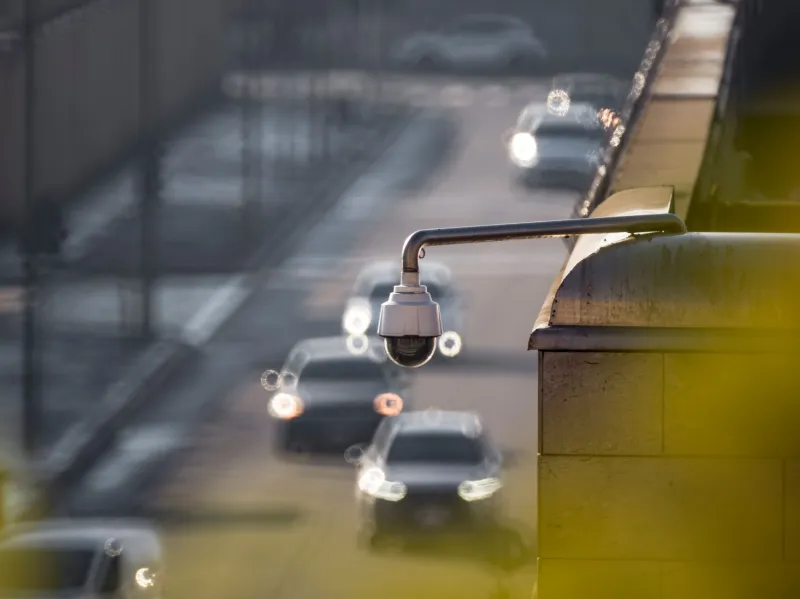
The average American spends roughly 300 hours behind the wheel each year. During every one of those hours, the vehicle they are driving is doing something the manufacturer's brochure rarely mentions: generating, storing, and transmitting a continuous stream of behavioral and positional data to servers the driver has never visited and companies they have likely never heard of.
This is not a hypothetical future risk. It is the operational reality of the connected-vehicle ecosystem as it exists today — and the privacy implications rival those of any smartphone app or social media platform that has drawn congressional scrutiny in recent years.
What Modern Vehicles Actually Record
The scope of in-vehicle data collection is broader than most drivers appreciate. A contemporary connected car — broadly defined as any vehicle with embedded cellular or Wi-Fi connectivity, which now describes the majority of new models sold in the United States — can capture dozens of discrete data streams simultaneously.
At the most fundamental level, telematics systems log GPS coordinates at regular intervals, constructing a granular map of everywhere the vehicle travels. But location data is only the beginning. Onboard diagnostics and electronic control units record throttle-input patterns, braking force and frequency, cornering behavior, lane-departure events, and rapid acceleration episodes. Collectively, these metrics paint a behavioral portrait of the driver that is often more accurate and harder to manipulate than any self-reported questionnaire.
Newer vehicle platforms extend the collection perimeter further. Cabin-facing cameras intended for driver-monitoring systems — designed ostensibly to detect drowsiness or distraction — can log facial orientation data. Microphones integrated for voice-command functionality have raised questions about ambient audio retention. Seat-weight sensors, seatbelt-buckle status, and even infotainment interaction logs are recorded by some manufacturers. Certain models with connected charging infrastructure capture battery state and charging-location history. The vehicle, in other words, has become an ambient sensor platform.
The Data Pipeline: From Dashboard to Data Broker
Understanding who receives this information requires tracing a pipeline that is considerably less transparent than the vehicles themselves.
The first recipient is almost always the manufacturer. Automakers maintain proprietary telematics back-ends that aggregate fleet-wide data, ostensibly for purposes ranging from over-the-air software updates to predictive maintenance alerts. The data retention policies governing this collection vary by manufacturer and are buried in lengthy connected-services agreements that buyers typically accept at the dealership without review.
From the manufacturer, data flows in several directions. Insurance companies represent one of the most commercially significant destinations. Usage-based insurance programs — marketed to consumers as a pathway to premium discounts — are in many cases simply formalized arrangements for continuous behavioral monitoring. Some programs operate through a dedicated dongle plugged into the vehicle's OBD-II port; others are integrated directly into the manufacturer's telematics infrastructure. The distinction matters less than the outcome: a persistent behavioral record that insurers can use to adjust premiums, deny coverage, or flag policyholders for additional scrutiny.
Investigative reporting published in 2024 revealed that multiple major automakers had been sharing detailed driving-behavior data with insurance data aggregators — in some cases without customers being clearly informed that enrollment in connected-services features constituted consent to that sharing. The findings prompted inquiries from several state attorneys general and renewed calls for federal legislative action, though comprehensive federal automotive-privacy legislation has not yet been enacted.
Third-party data brokers occupy a third tier of this pipeline. These firms purchase, license, or otherwise acquire vehicle telemetry and location data, then package and resell it to a range of clients that can include marketers, financial-services companies, law-enforcement agencies, and employers. The commercial data-broker industry operates with minimal federal oversight in the United States, and vehicle-derived data is not specifically carved out from the general absence of regulation.
The Legal Gray Zone
American privacy law has not kept pace with the capabilities of connected-vehicle technology. At the federal level, there is no statute that specifically governs the collection, retention, or sale of automotive telemetry data. The Federal Trade Commission retains general authority over deceptive trade practices, and it has taken action against certain data-broker conduct, but its reach is limited in the absence of sector-specific rules.
At the state level, California's Consumer Privacy Act and its successor, the California Privacy Rights Act, provide residents with some of the strongest data-rights protections in the country, including the right to know what personal information is collected, the right to request deletion, and the right to opt out of the sale of personal information. A handful of other states have enacted comparable frameworks. For the majority of American drivers residing outside these jurisdictions, however, the practical protections are sparse.
The consent architecture employed by the industry also warrants scrutiny. Connected-services agreements are typically presented as a condition of accessing certain vehicle features — navigation, remote start, over-the-air updates — creating a structure in which opting out of data collection may mean forgoing functionality the buyer reasonably expected when purchasing the vehicle.
Practical Steps for Drivers Seeking to Limit Exposure
Complete elimination of in-vehicle data collection is not feasible for most drivers operating modern connected vehicles. However, several measures can meaningfully reduce exposure.
Reviewing connected-services agreements before or immediately after vehicle purchase is an essential first step. Many manufacturers provide opt-out mechanisms for specific data-sharing programs, though these are rarely surfaced prominently. Contacting the manufacturer's privacy team directly — using contact information found in the privacy policy rather than through a dealership — is often more productive than attempting to navigate account settings alone.
Drivers enrolled in usage-based insurance programs should carefully evaluate what data those programs collect and how long it is retained. If the discount offered does not justify the surveillance trade-off, discontinuing participation is a legitimate option worth considering.
For drivers in states with comprehensive privacy laws, submitting formal data-access and deletion requests to both the manufacturer and any data brokers identified in the privacy policy is an actionable exercise. It surfaces what has been collected and creates a documented record of the request.
Finally, staying informed about legislative developments matters. Several federal proposals addressing automotive data privacy have been introduced in recent congressional sessions. Consumer awareness and engagement with those processes influences whether they advance.
The Broader Surveillance Picture
The connected vehicle represents a convergence of several trends that CipherWatch has tracked across multiple domains: the normalization of ambient data collection, the opacity of consent frameworks, and the commercial infrastructure that monetizes behavioral data at scale. What distinguishes the automotive context is the intimacy and granularity of what is captured. A person's driving record, in the modern sense, is not a DMV abstraction — it is a continuous behavioral log that reveals where they worship, where they receive medical care, with whom they spend time, and how they respond under stress.
That record is currently being compiled, stored, and sold with a level of transparency that falls well short of what a reasonable consumer would expect. Until the regulatory environment catches up, the burden of awareness falls on the driver.