Silent Signals: How Bluetooth Low Energy Is Quietly Mapping Your Every Move
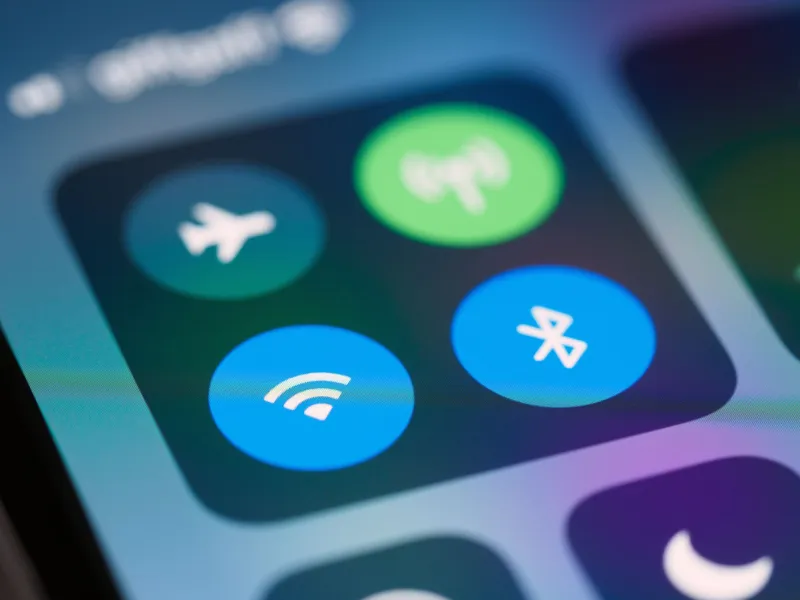
Most Americans associate Bluetooth with wireless headphones or hands-free calling in the car. Few think of it as a surveillance infrastructure. Yet embedded in the hardware of virtually every modern smartphone, laptop, and wearable is a radio transmitter that continuously announces its presence — whether the user realizes it or not. That signal, governed by a protocol called Bluetooth Low Energy (BLE), has quietly become one of the most potent and least-discussed location-tracking mechanisms in the consumer technology landscape.
The consequences range from mildly unsettling — a retail chain building a behavioral map of your in-store wandering — to genuinely dangerous, as domestic abusers and stalkers exploit the same technology to monitor victims in real time.
What Bluetooth Low Energy Actually Does
BLE was introduced as a power-efficient variant of the classic Bluetooth standard, engineered specifically for devices that need to communicate frequently but transmit only small amounts of data. Fitness trackers, smart locks, medical monitors, and retail beacons all rely on it. The protocol works by having a device broadcast short, repeating radio packets — called advertisements — that nearby receivers can detect without ever forming a formal connection.
That last detail matters enormously. Unlike a phone call or a Wi-Fi session, BLE advertisement scanning is entirely passive on the receiving end. A device equipped with a BLE scanner can log the unique hardware identifier — the MAC address — embedded in those packets, recording which devices were present, at what signal strength, and for how long. In theory, MAC addresses rotate periodically on modern iOS and Android devices to frustrate exactly this kind of passive fingerprinting. In practice, researchers have repeatedly demonstrated that rotation intervals, timing patterns, and companion data fields can be cross-referenced to re-identify a device across sessions.
The Retail Beacon Network You Never Agreed To
Physical retail has been transformed by BLE beacon infrastructure. Major chains — including grocery stores, department retailers, and shopping malls across the United States — have deployed dense networks of BLE beacons that interact with shopper smartphones through store apps. When a customer has a retailer's app installed and location permissions enabled, those beacons can track movement through the store with aisle-level precision, correlating dwell time with purchase data to build granular behavioral profiles.
The data rarely stays with the retailer. Third-party analytics firms aggregate location intelligence across multiple retail partners, constructing cross-venue profiles that can follow a consumer from the pharmacy to the grocery store to the gas station. A 2023 investigation by the Electronic Frontier Foundation found that many of these data-sharing arrangements are buried in terms-of-service agreements that few users read and fewer still understand.
Even without a store app, passive BLE scanners positioned at store entrances can log MAC addresses. While randomization complicates long-term tracking, researchers at the University of California San Diego demonstrated in 2022 that companion fields in BLE advertisement packets — including device name fragments and service UUIDs — can function as persistent identifiers even when the MAC address rotates.
AirTags and the Stalking Problem
Apple's AirTag, launched in 2021 as a $29 item-finding accessory, distilled BLE tracking into a consumer product so small it fits inside a coat pocket or slips beneath a car's wheel well. The device pings its location through Apple's vast Find My network — a crowd-sourced mesh of hundreds of millions of iPhones — and reports coordinates back to the registered owner with remarkable accuracy.
The legitimate use case is straightforward: find lost luggage, locate misplaced keys. The abuse case was apparent almost immediately. Law enforcement agencies across the country began receiving reports of AirTags planted on vehicles, slipped into bags, and concealed in clothing — placed by stalkers, abusive partners, and even car thieves scouting targets. By mid-2022, Apple had logged thousands of unwanted tracking complaints, and multiple criminal cases had been filed in jurisdictions from New York to California.
Apple responded by shortening the alert window — iPhones now notify users when an unknown AirTag has been traveling with them for as little as eight to twenty-four hours — and by releasing an Android app, Tracker Detect, that performs manual scans. Critics argue these measures remain inadequate. The Android alert system is not automatic; it requires the user to proactively open the app and initiate a scan. Android devices without the app installed receive no notification at all, a gap that disproportionately affects users on older or budget hardware.
Competing products from Tile, Samsung, and others present analogous risks. The broader ecosystem of Bluetooth trackers has, in effect, democratized physical surveillance.
Beyond AirTags: BLE Exploits in the Wild
The threat surface extends well beyond consumer tracking tags. Security researchers have documented several additional attack vectors:
BLE Sniffing in Public Spaces. Inexpensive hardware — a Raspberry Pi paired with a USB BLE adapter costs under $60 — can passively log every BLE advertisement within a roughly 30-meter radius. Deployed in a coffee shop, an airport gate, or a subway car, such a device can map the movement of regulars over days or weeks without interacting with a single target device.
Beacon Spoofing. Attackers can broadcast forged BLE packets that mimic legitimate retail or venue beacons, potentially triggering unwanted behavior in apps configured to respond to beacon signals — including location disclosure or automatic check-ins.
Cross-Layer Correlation. When BLE data is combined with Wi-Fi probe requests and ultrasonic audio beacons (used by some cross-device tracking SDKs embedded in mobile apps), the resulting location profile achieves a level of precision that no single protocol could deliver alone.
How to Detect Unauthorized Tracking
For iOS users, Apple's built-in safety alerts represent the first line of defense. Ensure that notifications are enabled under Settings > Privacy & Security > Tracking, and pay attention to any alert indicating an unknown accessory has been detected near you.
Android users should install AirTag Detector or Apple's own Tracker Detect application and run periodic manual scans, particularly after attending large events, using public transportation, or parking in unfamiliar locations. Google has also been rolling out native unknown tracker alerts through Google Play Services for devices running Android 6.0 and above — verify that your device's Play Services are current.
For physical inspection, focus on the undercarriage of your vehicle (particularly around wheel wells and the rear bumper), the interior of bags and luggage you have checked or temporarily left unattended, and jacket or coat pockets. AirTags and comparable devices are roughly the size and weight of a large shirt button.
At the network level, consider disabling Bluetooth entirely when it is not actively in use. On both iOS and Android, toggling Bluetooth off through the Settings menu — not the Control Center shortcut, which on iOS suspends rather than disables the radio — stops BLE advertisements from your device and prevents passive scanning by nearby infrastructure.
Users with elevated threat profiles — survivors of domestic abuse, journalists, political activists — should consult resources provided by organizations such as the National Domestic Violence Hotline's Safety Net program, which offers device-security guidance tailored to high-risk personal situations.
The Regulatory Gap
Federal law has not kept pace with BLE's capabilities. The Federal Trade Commission has taken enforcement action against companies for deceptive location data practices, but no comprehensive federal statute governs the passive collection of BLE identifiers in public spaces. Several states — California, Virginia, and Colorado among them — have enacted consumer privacy laws that impose consent requirements on certain forms of location tracking, but enforcement remains inconsistent and penalties modest relative to the commercial value of the data.
Legislative proposals addressing tracker abuse have stalled repeatedly in Congress, leaving consumers to navigate a patchwork of platform-level policies, voluntary industry standards, and their own technical vigilance.
The Takeaway
Bluetooth Low Energy is not inherently malicious. It powers genuinely useful applications, from medical telemetry to accessible navigation tools for people with visual impairments. But the same properties that make it efficient — low power, passive discoverability, broad device support — make it a natural instrument of surveillance when deployed without meaningful consent frameworks or robust technical safeguards.
Awareness is the first and most accessible defense. Understanding that your phone is continuously broadcasting its presence, and that inexpensive hardware can record that broadcast, reframes BLE from a background convenience into an active privacy consideration. Treat your Bluetooth radio the way you treat your front door: leave it open only when you intend to.