Intimate by Design: How Your Fitness Tracker, Dating App, and Meditation Subscription Are Quietly Assembling a Psychological Dossier on You
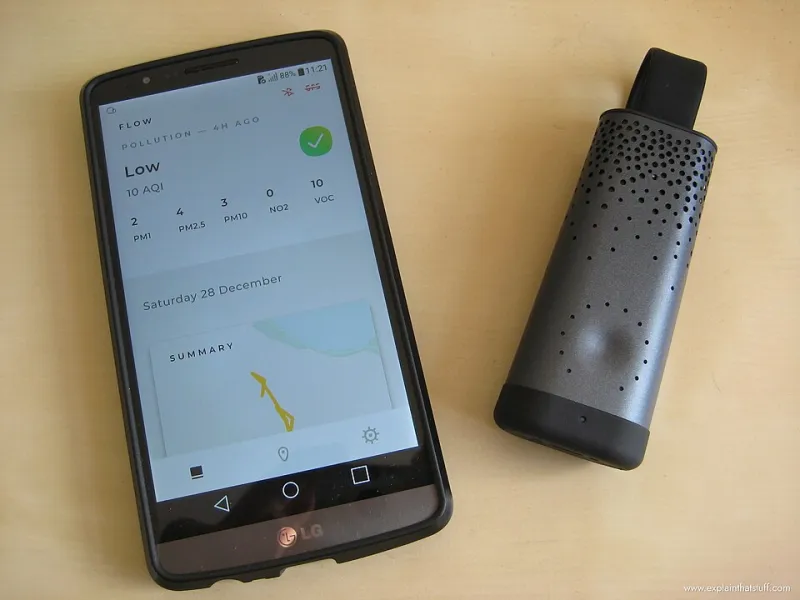
Photo: Explain That Stuff, CC BY-SA 2.0, via Wikimedia Commons
On the surface, your morning run tracked by a fitness wearable, your evening swipe session on a dating platform, and your ten-minute guided breathing exercise before bed have nothing in common. They belong to different corners of your life, managed by different companies operating under different brand identities. What most users do not realize is that these services frequently share a common infrastructure: the commercial data broker ecosystem that turns behavioral fragments into a coherent — and commercially valuable — psychological portrait.
This is not a hypothetical concern. It is an operating reality of the modern subscription economy, and its implications for personal privacy extend well beyond targeted advertising.
The Subscription Layer Nobody Reads About
When a consumer signs up for a fitness subscription, a mindfulness app, or a dating service, they typically focus on the product itself. What they rarely scrutinize is the data-sharing architecture embedded in the terms of service. Each of these platforms collects behavioral data that, in isolation, appears mundane. A fitness app records sleep duration, heart rate variability, and workout frequency. A dating platform logs swipe patterns, conversation length, and the times of day a user is most active. A meditation app tracks session completion rates, stress check-in scores, and which audio guides a user returns to repeatedly.
None of these data points is particularly revealing on its own. Aggregated across platforms and interpreted through modern inference models, however, they generate what the data science community calls psychographic profiles — detailed assessments of a person's personality traits, emotional states, stress thresholds, relationship status, and psychological vulnerabilities.
Researchers at institutions including Stanford and Cambridge have demonstrated that behavioral data from digital platforms can predict the Big Five personality traits — openness, conscientiousness, extraversion, agreeableness, and neuroticism — with accuracy that rivals self-reported psychological assessments. The commercial data broker industry has operationalized precisely this kind of inference at scale.
How the Data Flows Between Unrelated Services
The mechanism connecting your fitness tracker to your dating app is rarely a direct integration. Instead, it operates through intermediary data brokers — companies whose entire business model is the acquisition, enrichment, and resale of consumer behavioral data. Major brokers aggregate records from hundreds or thousands of sources, match individual profiles using persistent identifiers such as email addresses, device fingerprints, and mobile advertising IDs, and sell enriched dossiers to a broad range of buyers.
Those buyers include advertisers, insurance underwriters, financial lenders, employers conducting background screenings, and political campaign organizations. The psychographic profile assembled from your subscription behavior may therefore influence not only which advertisements you see, but what interest rate you are quoted on a loan, whether a recruiter flags your resume, or which political messaging is targeted at you during an election cycle.
In the United States, the legal framework governing this data flow remains fragmented. The Health Insurance Portability and Accountability Act protects medical records held by covered healthcare entities, but fitness app data generally falls outside its scope. The California Consumer Privacy Act and its successor, the California Privacy Rights Act, grant California residents certain rights to access and delete data held by covered businesses, but enforcement is inconsistent and the broker pipeline is difficult for individual consumers to trace.
The Psychological Inference Engine
What makes subscription data particularly sensitive is its longitudinal character. A single data point — one skipped workout, one late-night dating app session — tells a limited story. But months of behavioral signals from multiple subscription services allow inference engines to identify patterns that correlate reliably with psychological states.
Consider what a data scientist can infer from the following combination: a user whose fitness tracker shows declining sleep quality and reduced workout frequency over six weeks, whose meditation app logs show increased session abandonment, and whose dating app activity spikes during late-night hours. This pattern is statistically associated with elevated stress, possible depressive symptoms, and social isolation. A platform or broker with access to all three data streams can flag this user as psychologically vulnerable — a status that carries commercial value for advertisers selling supplements, therapy platforms, or financial products targeting people in distress.
This is not speculation. Academic literature on affective computing and behavioral targeting documents these inference capabilities extensively, and investigative reporting by outlets including The Wall Street Journal and ProPublica has traced how commercially derived health inferences reach insurance and financial markets.
What Consumers Are Inadvertently Revealing
Beyond the data each app explicitly collects, users generate what researchers call metadata exhaust — timing patterns, session durations, feature usage rates, and interaction sequences that reveal behavioral rhythms the user never intended to disclose. A meditation app user who opens the app every night at 2 a.m. is communicating something about their sleep patterns that the app's stated data collection policy may not explicitly acknowledge. A dating app user who abandons conversations after the first exchange is generating a signal about their communication style or emotional availability.
The aggregation of this exhaust across platforms produces what privacy scholars describe as the contextual integrity problem: data shared in one social context — a health app designed to support personal wellness — is repurposed in entirely different contexts, such as financial risk modeling, without the user's meaningful knowledge or consent.
Practical Steps to Limit Your Psychographic Exposure
While no consumer can fully opt out of the commercial data ecosystem, several measures meaningfully reduce exposure.
Audit app permissions regularly. On both iOS and Android, users can review which applications have access to location data, health data, contacts, and microphone access. Revoking unnecessary permissions limits the data surface each app can collect.
Use separate email addresses for different subscription categories. A dedicated address for health and fitness apps, distinct from the one used for financial services or social platforms, disrupts the cross-platform matching that brokers rely on.
Review and exercise data deletion rights. Under applicable state laws, many consumers have the right to request that companies delete personal data and opt out of its sale to third parties. Submitting these requests to brokers directly — services like Spokeo, Acxiom, and LexisNexis maintain opt-out portals — reduces the depth of your commercial dossier.
Be skeptical of wellness app privacy claims. Terms like "we do not sell your data" frequently coexist with clauses permitting data sharing with "trusted partners" or "service providers" — language that encompasses a broad range of third-party arrangements.
Limit the use of social login. Authenticating to a fitness or meditation app using a Google or Facebook account creates a direct data bridge between those ecosystems and the subscription service.
The subscription economy has made wellness, connection, and self-improvement more accessible than at any previous point in history. It has also created a commercially incentivized infrastructure for mapping the inner lives of its users at unprecedented resolution. Understanding the architecture of that infrastructure is the first step toward navigating it with intention.