Manufactured Urgency: How App Developers Engineer Notification Systems to Hijack Your Attention
Your phone vibrates. You glance down, unlock the screen, and find — nothing of consequence. A social media app has informed you that someone you barely know liked a photograph you posted three years ago. You've been interrupted, your concentration broken, your attention harvested. This was not an accident.
Across the American mobile app ecosystem, a largely unexamined behavioral engineering practice has taken hold. Developers and product teams are deliberately designing notification systems not to serve users' informational needs, but to manufacture a compulsive checking reflex — one that keeps engagement metrics climbing and advertising revenue flowing. Security and privacy researchers have begun to document how these systems intersect with broader concerns about deceptive design, data exposure, and the erosion of conscious digital behavior.
The Architecture of Artificial Urgency
At the surface level, push notifications appear to be a neutral utility — a mechanism for delivering timely, relevant information to users who have opted in. In practice, the systems powering them are considerably more strategic.
Product teams at major app platforms routinely A/B test notification copy, delivery timing, and frequency to identify the precise combination most likely to trigger an unlock event. The goal is not to inform users of something genuinely important. The goal is to generate what behavioral economists call a "variable reward" — the same neurological mechanism that makes slot machines difficult to walk away from.
When a notification arrives with ambiguous language — "Someone responded to your post" rather than identifying who — it creates an information gap that the brain is neurologically compelled to close. The user unlocks the phone not because they need to, but because the notification was specifically engineered to make not checking feel psychologically uncomfortable.
Phantom Alerts and the Badge Economy
Among the more deceptive practices documented by researchers is the use of what the industry sometimes euphemistically calls "re-engagement notifications" — alerts triggered not by any genuine user-relevant event, but by the simple fact that a user has not opened an application recently.
These phantom alerts frequently take the form of fabricated social proof: artificial counts of people who have "viewed your profile," vague references to unspecified activity in your network, or urgency-coded language suggesting that something time-sensitive is waiting for your attention. In many cases, the underlying event, if it exists at all, is algorithmically selected for emotional salience rather than practical relevance.
App icon badge counts — those red numerical indicators sitting on your home screen — operate through a similar logic. Research published in behavioral science journals has demonstrated that unresolved badge counts generate measurable anxiety responses in habitual smartphone users, effectively transforming the home screen into a dashboard of manufactured obligations.
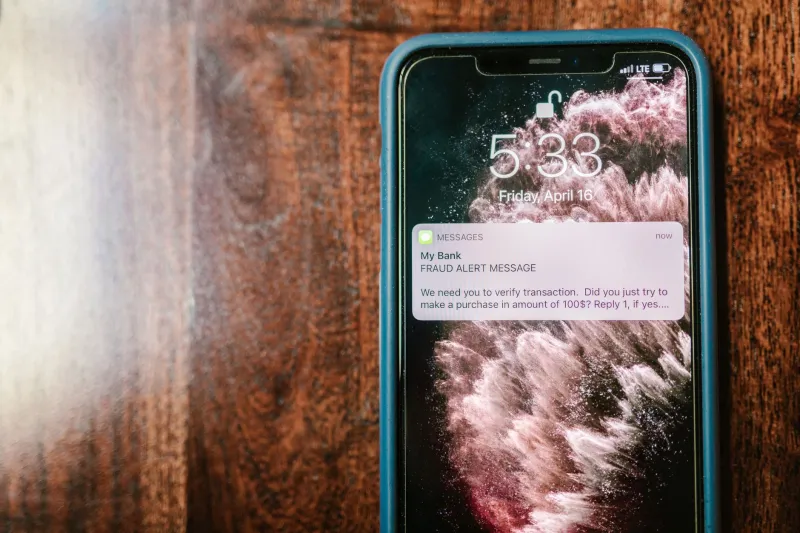
From a security standpoint, this matters for reasons that extend beyond attention management. Users conditioned to respond reflexively to notifications are substantially more susceptible to phishing attempts delivered through the same channel. A fraudulent alert mimicking a banking app's notification style, for instance, exploits the same conditioned response that legitimate apps have spent months or years cultivating.
The Consent Problem
When iOS and Android devices prompt users to allow notifications from a newly installed application, the permission request is framed as a simple yes-or-no decision. What it does not disclose is the behavioral architecture that permission is about to authorize.
Consumers in the United States have limited regulatory recourse here. Unlike the European Union's General Data Protection Regulation, which has been interpreted to require more substantive transparency around behavioral profiling, American privacy law offers no federal standard governing notification design or the use of psychological manipulation techniques in app interfaces. The result is a permissive environment in which deceptive notification practices face no meaningful legal constraint.
The Federal Trade Commission has pursued action against deceptive dark patterns in other contexts — most notably in subscription cancellation flows — but notification manipulation has yet to attract equivalent regulatory scrutiny.
Security Implications Beyond Distraction
The security community has identified several concrete threat vectors that flow directly from notification-conditioned behavior.
First, the habitual unlock reflex reduces the cognitive friction that serves as a first line of defense against social engineering. A user who has been trained to respond immediately and automatically to notification stimuli is less likely to pause and evaluate whether a given alert is legitimate before tapping through.
Second, applications that have been granted notification permissions maintain a persistent communication channel to the user's device — one that, if the application itself is compromised through a supply-chain attack or a malicious update, can be weaponized to deliver fraudulent prompts. The trust users extend to familiar notification interfaces is an exploitable asset.
Third, notification metadata — including delivery timestamps, interaction rates, and behavioral response patterns — is frequently harvested and shared with third-party advertising and analytics networks. This data contributes to the kind of granular behavioral profiles that have been documented as inputs to targeted phishing and spear-phishing campaigns.
Reclaiming Your Notification Environment
Defending against manufactured urgency requires a deliberate and somewhat counterintuitive approach: treating notification permissions as a security boundary rather than a convenience toggle.
Security researchers and digital wellness advocates recommend the following framework for US users:
Conduct a full notification audit. On both iOS (Settings → Notifications) and Android (Settings → Apps → Notifications), review every application that currently holds notification permission. For each one, ask whether the notifications it delivers have ever prompted a genuinely necessary action. If the honest answer is no, revoke the permission.
Eliminate badge counts. Badge indicators serve almost no legitimate informational purpose for most applications. Disabling them removes a persistent source of manufactured anxiety from your home screen without any meaningful cost to your access to information.
Use scheduled notification delivery. Both iOS 15 and later versions of Android support notification summary features that batch non-urgent alerts for delivery at user-defined times. This single change can substantially reduce the frequency of reflexive unlock behavior.
Treat unfamiliar notification prompts as threat indicators. Any application that requests notification permissions immediately upon installation, before you have had an opportunity to assess its value, is exhibiting a behavioral pattern consistent with engagement-farming design. This is not inherently malicious, but it is a signal worth noting.
Apply heightened scrutiny to financial and account-related notifications. Given the phishing risk associated with conditioned notification responses, alerts purporting to come from banking, payment, or account-management applications should always be verified by navigating directly to the application rather than tapping through from the notification itself.
The Attention Economy's Quiet Security Risk
The broader story here is one that sits squarely at the intersection of behavioral manipulation and digital security. The same design practices that drive app engagement metrics also degrade the attentive, deliberate behavior that effective security hygiene requires. Users who have been conditioned to respond to their phones reflexively are, in a meaningful sense, more vulnerable users.
Until federal regulators move to impose transparency requirements on notification design — a prospect that currently appears distant — the burden of defense falls on individual users. Understanding the mechanics of manufactured urgency is the first and most important step toward dismantling it.