Ambient Intelligence, Ambient Exposure: The Behavioral Dossier Your Smart Home Is Quietly Assembling
There is a particular irony embedded in the modern American smart home. Devices marketed as tools of personal convenience — thermostats that learn your schedule, speakers that answer your questions, cameras that watch your front door — are simultaneously functioning as some of the most sophisticated data-collection infrastructure ever installed in a private residence. The intelligence they accumulate is not incidental. In many cases, it is the product.
The question worth asking is not whether your smart home devices are collecting data. They are. The more consequential question is what that data reveals when it is aggregated, who holds it, and what they are permitted to do with it.
The Sensor Layer You Agreed to Install
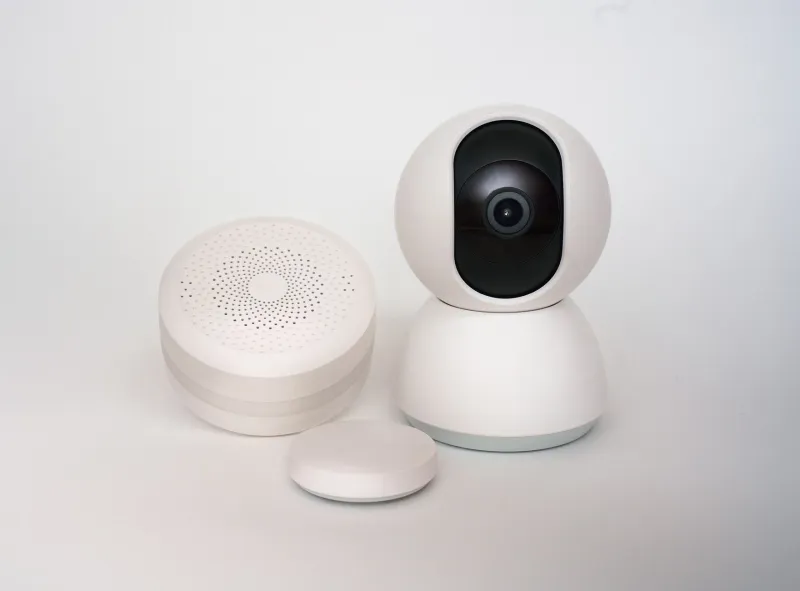
Consider the behavioral footprint generated by a modestly equipped smart home over the course of a single week. A smart thermostat logs temperature adjustments with timestamps precise enough to reconstruct a household's sleep schedule, work routine, and weekend patterns. A connected security camera captures not just faces but movement frequency — how often residents leave, how long they are absent, and when the house sits empty. A smart speaker processes ambient sound to detect voice commands, but its always-on microphone architecture means it is also passively logging acoustic events in the background. A Wi-Fi-connected appliance like a smart refrigerator or washer tracks usage cycles that correlate directly with meal preparation habits and domestic routines.
None of this data is inherently sensitive in isolation. A thermostat reading of 68°F at 6:47 a.m. tells you very little. But when that reading is combined with a front-door camera event at 7:12 a.m., a voice query about traffic conditions at 7:08 a.m., and a coffee maker activation at 6:49 a.m., a precise portrait of a morning routine begins to emerge — one that repeats, with minor variation, five days a week.
This is the core mechanism of behavioral profiling: not the extraction of a single sensitive fact, but the statistical inference of patterns from an accumulation of mundane signals.
Who Receives the Data — and Under What Terms
Most smart home device manufacturers transmit usage data to cloud infrastructure they control. This is a functional necessity for many features: remote access, firmware updates, and AI-driven personalization all require server-side processing. The privacy concern is not the transmission itself, but the downstream use of what is transmitted.
Privacy policies for major smart home platforms — including those operated by some of the largest technology companies in the United States — typically reserve broad rights to share aggregated or "de-identified" data with advertising partners, analytics vendors, and affiliated services. The practical effect is that behavioral inferences drawn from your home's sensor data may inform advertising targeting, insurance risk modeling, or retail recommendation engines without your explicit awareness.
Third-party integrations compound this exposure. When a smart home device connects to a third-party skill, automation platform, or voice-assistant ecosystem, data-sharing obligations extend to additional parties whose privacy practices may be materially less rigorous than the primary manufacturer's. Each integration point represents a new contractual relationship governing your data — one most users never read.
Researchers at academic institutions and independent security organizations have also demonstrated that even legitimately anonymized smart home data can be re-identified with moderate confidence when cross-referenced against other commercially available datasets, such as location history or purchase records. The assumption that aggregated data is inherently private has not held up under scrutiny.
The Monetization Architecture Behind "Free" Features
The economics of the smart home market clarify the incentive structure. Many connected devices are sold at or near cost, with manufacturers generating margin through subscription services, data licensing arrangements, and ecosystem lock-in that drives platform-level advertising revenue. When a device is priced to be affordable, it is worth asking what the long-term revenue model actually is.
Some manufacturers have been candid about this. Others have not. What the market has consistently demonstrated is that behavioral data derived from home environments commands a premium in the broader data economy — precisely because it captures consumer behavior in contexts that are difficult to observe through other means. Retailers, insurers, political campaigns, and financial services firms have all expressed interest in data assets that can predict domestic routines, purchasing triggers, and lifestyle patterns.
The Federal Trade Commission has taken enforcement action against smart home device companies for deceptive data practices in recent years, and several state attorneys general have investigated smart home privacy violations under consumer protection statutes. These actions represent meaningful regulatory pressure, but they have not yet produced comprehensive federal privacy legislation that would impose uniform data minimization standards on the industry.
Practical Measures for Limiting Your Exposure
Reducing your smart home's surveillance footprint does not require abandoning connected devices entirely. It requires a more deliberate approach to how those devices are configured, networked, and integrated.
Network segmentation is the most structurally effective measure available to most users. Placing smart home devices on a dedicated guest network or VLAN — separate from computers, phones, and tablets — limits the lateral access any compromised device has to your primary digital environment. Most modern home routers support this configuration without specialized technical knowledge.
Reviewing and restricting third-party integrations is equally important. Audit the skills, automations, and connected services associated with each device. Disable any integration that is not actively used. Each dormant connection is a data-sharing arrangement that provides no benefit to you.
Local processing alternatives exist for several categories of smart home devices. Home automation platforms that process data on a local hub rather than a cloud server — such as certain open-source options — eliminate the cloud transmission layer entirely. This approach requires more technical configuration but provides substantially greater data sovereignty.
Microphone and camera management warrants particular attention. Devices with always-on microphones should be physically muted when not in use; hardware mute switches, where available, are more reliable than software-based controls. Indoor cameras should be positioned to minimize capture of spaces where sensitive activities occur.
Periodic privacy policy review is tedious but consequential. Manufacturers update their data-sharing terms, sometimes materially, with limited fanfare. Setting a calendar reminder to review the privacy policies of your primary smart home platforms once per year takes less than an hour and may surface changes worth acting on.
The Broader Principle at Stake
The home has historically occupied a privileged position in American privacy law and cultural expectation. It is the space where individuals are least guarded, most candid, and most themselves. The introduction of always-on, network-connected sensors into that environment represents a structural shift in what private life actually means — not because any single device is inherently threatening, but because the aggregate of their output is something qualitatively new.
Convenience and privacy are not inherently incompatible. But realizing both requires that consumers approach smart home technology with the same critical scrutiny they would apply to any other agreement in which something of value is being exchanged. In this case, what is being exchanged is a continuous, high-resolution record of how you live.
That is a significant thing to give away. It deserves to be a conscious choice.